Bioinformatics · Multi-omics

Ali Hakimzadeh

I build the pipelines that turn raw sequence into biology, from single cells to whole ecosystems.

  • Fungi
  • Bacteria
  • Protists
  • Archaea
  • Community ordination of environmental DNA amplicon data

Tools and platforms

  • Python
  • R
  • Bash
  • Nextflow
  • Snakemake
  • Docker
  • Singularity
  • SLURM / HPC
  • AWS
  • scVI
  • PyTorch
  • TensorFlow
  • Parabricks
  • QIIME2
  • DADA2
  • Biopython

0

Peer-reviewed publications

0

Open resources maintained

0

Countries of research
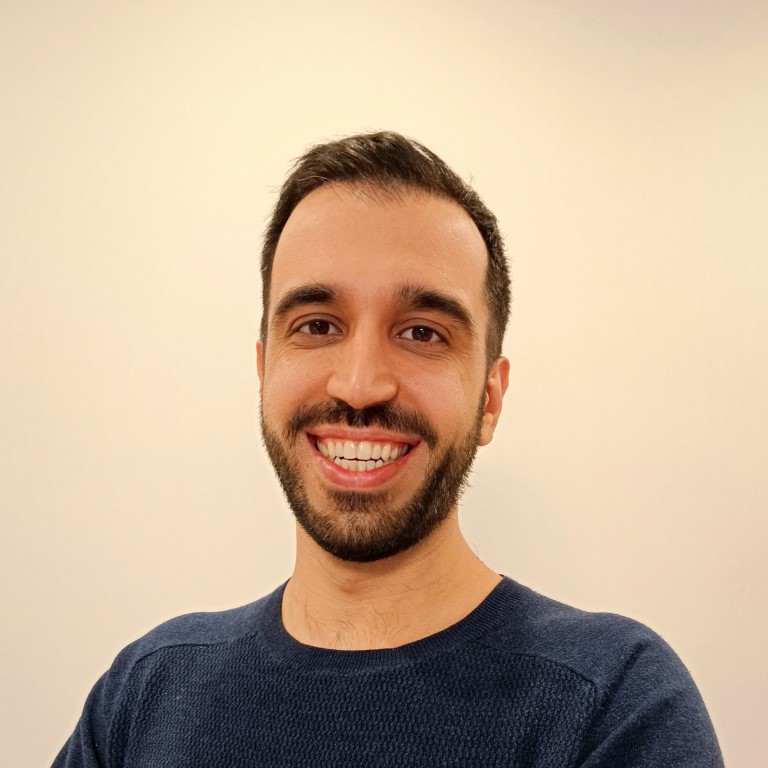
Portrait of Ali Hakimzadeh
University of Tartu Institute of Ecology & Earth Sciences · Tartu, Estonia

Long reads, hard filters,
honest tables.

I am a bioinformatician at the University of Tartu, where my PhD focuses on the analysis of long DNA markers for microbiome and fungal community studies. My core work covers amplicon-sequencing and metagenomics pipeline development, long-read quality control, and benchmarking of chimera-detection algorithms.

Before my PhD I worked in clinical genomics, covering single-cell and bulk transcriptomics, WGS/WES variant calling, and CRISPR-screen analysis for cancer research. I contribute to the PipeCraft2 pipeline platform and the EUKARYOME rRNA reference database, and I am part of the TREC (Traversing European Coastlines) sampling initiative.

  • PhDEcology & Botany · Univ. of Tartu
  • MScMedical Biotechnology · Univ. of Siena
  • StackPython · R · Bash · Nextflow
  • ScaleHPC (SLURM) · AWS · Docker

Research

Where I work in the stack.

From clinical cancer genomics to continental-scale biodiversity, built on reproducible, benchmarked methods.

PipeCraft2 · EUKARYOME

Amplicon sequencing & metagenomics

Profiling microbial and eukaryotic communities from environmental DNA using amplicon (barcoding and metabarcoding) and shotgun metagenomic sequencing, built on the containerized, Nextflow-based PipeCraft2 with EUKARYOME as the taxonomic backbone.

  • PlatformPipeCraft2 · Nextflow, containerized
  • ReferenceEUKARYOME · Database (Oxford), 2024
  • ScaleHPC (SLURM) · AWS

PacBio · Oxford Nanopore

Long-read sequencing & QC

Quality-control and denoising workflows for PacBio and Oxford Nanopore long reads, benchmarking filtering strategies and their downstream effect on biological interpretation.

PeerJ 2025

Algorithm benchmarking & validation

Comparative evaluation of chimera-detection algorithms for long-read amplicons, resolving which approaches minimize false positives while preserving true biological signal. Published in PeerJ (2025).

10X Chromium · CROP-seq

Single-cell & bulk transcriptomics

scRNA-seq, bulk RNA-seq and CRISPR (CROP-seq) screen analysis for cancer research, including cell-type annotation, trajectory and clonal-evolution inference, and CNV detection, using ML frameworks such as scVI, TensorFlow and PyTorch.

Nextflow · Snakemake

Workflow & pipeline engineering

Reproducible, containerized workflows in Nextflow and Snakemake (Docker, Singularity), deployable on HPC clusters (SLURM) and cloud (AWS), from one-off analyses to production tools used by the research community.

Nvidia Parabricks

Variant calling (WGS/WES)

Germline and somatic variant calling, structural-variant and CNV detection across short- and long-read platforms, including GPU-accelerated pipelines (Nvidia Parabricks) for clinical and fungal genomics.

Tools, databases & studies.

Open, reproducible work, from pipeline platforms used worldwide to focused methodological studies.

01

PipeCraft2

pipecraft2 organization · University of Tartu

A modular, containerized pipeline for amplicon sequencing and metabarcoding, taking data end to end from raw reads to community tables and deployable on HPC and cloud. I develop new modules and maintain existing workflows.

  • Nextflow
  • Docker
  • Singularity
  • Python
  • R
RAW READS QUALITY CONTROL DENOISE / CLUSTER CHIMERA FILTER COMMUNITY TABLE
PipeCraft2 module flow · raw reads to community table
  1. 02 EUKARYOME University of Tartu · Tedersoo Lab A comprehensive rRNA gene reference database for identifying all eukaryotic taxa, powering environmental DNA classification. Published in Database (Oxford), 2024.
  2. 03 SnakeEUK University of Tartu A Snakemake pipeline that reformats eukaryotic rRNA reference sequences into tool-specific formats (DADA2, QIIME2, SINTAX, Mothur), handling encoding, taxonomy normalization and placeholder cleaning.
  3. 04 DEASS University of Tartu A statistical method for differential expression in RNA-seq, designed to improve power and reduce false discovery in multi-group comparisons with complex experimental designs. In preparation
  4. 05 Long-read chimera benchmarking University of Tartu · PeerJ 2025 Systematic evaluation of chimera-detection algorithms for PacBio and Nanopore amplicons, revealing high false-positive rates and the genuine sequences discarded during quality filtering.
  5. 06 TREC: European Coastlines EMBL · International consortium An international biodiversity sampling initiative spanning European coastlines. I analyze amplicon-sequencing and metagenomics datasets generated across multiple countries and sequencing platforms.
  6. 07 Single-cell genomics (cancer) Azienda Ospedaliera Senese, Siena, Italy Integrative single-cell analysis of cancer samples using 10X Chromium scRNA-seq and CROP-seq. ML models for clonal evolution, CNV detection and enrichment, alongside WGS/WES pipelines on Nvidia Parabricks. Clinical, not public

Selected work.

Peer-reviewed research in computational biology and environmental genomics. Full list on Google Scholar →

PeerJ2025

Are we throwing away good data? Evaluation of chimera-detection algorithms on long-read amplicons reveals high false-positive rates

Hakimzadeh A, Mikryukov V, Metsoja M, Tedersoo L, Anslan S.

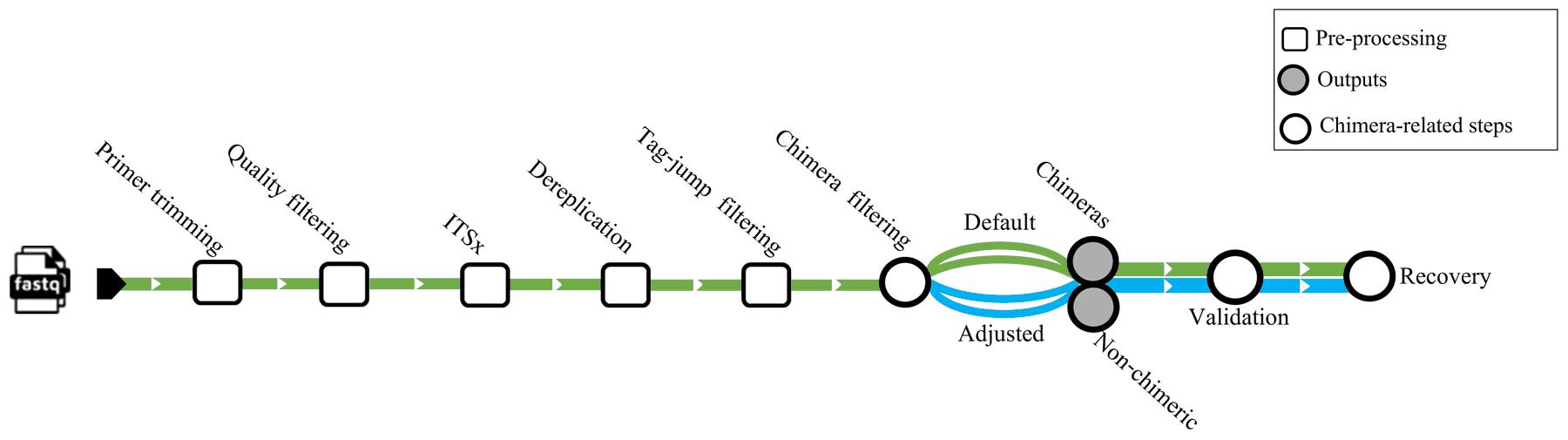
Study workflow: FASTQ reads pass through primer trimming, quality filtering, ITSx, dereplication and tag-jump filtering, then chimera filtering under default and adjusted settings, splitting into chimeric and non-chimeric outputs that are validated and recovered.
Fig. 1 · Chimera-detection workflow, default vs adjusted settings. From Hakimzadeh et al. 2025, PeerJ 13:e20456 · CC BY 4.0
doi:10.7717/peerj.20456
  1. 2026Biological Invasions

    Invisible passengers: the diversity and invasion risks of fungi and bacteria transported via footwear of international airport passengers

    Hagh-Doust N, Hakimzadeh A, Kupagme JY, Dierickx G, Copot O, Tedersoo L.

    doi:10.1007/s10530-025-03741-y →
  2. 2025Freshwater Biology

    The impact of oil palm plantations and pastures on benthic prokaryotic and fungal communities in tropical streams

    Rojas-Castillo OA, Hakimzadeh A, Tedersoo L, Jacobsen D, Kepfer-Rojas S.

    doi:10.1111/fwb.14376 →
  3. 2024Database (Oxford)

    EUKARYOME: the rRNA gene reference database for identification of all eukaryotes

    Tedersoo L, Mikryukov V, Zizka A, Bahram M, Hagh-Doust N, Anslan S, … Hakimzadeh A, … Abarenkov K.

    doi:10.1093/database/baae043 →
  4. 2023Molecular Ecology Resources

    A pile of pipelines: an overview of the bioinformatics software for metabarcoding data analyses

    Hakimzadeh A, Absalon A, Albanese D, Arulalapperumal V, Benucci GMN, Bhatt VD, … Anslan S.

    doi:10.1111/1755-0998.13847 →

A path across
three countries.

From clinical single-cell genomics in Siena to environmental genomics in Estonia.

Awards & honors

  • Marie Skłodowska-Curie European Scholarship
  • Chan Zuckerberg Initiative grant (2022)
  • Dora Plus scholarship (2023)
  • Best presentation award, Dept. of Botany, Tartu (2024)
  1. 2021 — present

    Bioinformatician

    University of Tartu, Estonia · Institute of Ecology & Earth Sciences

    Amplicon-sequencing and metagenomics analysis of microbiome and fungal community data; PipeCraft2 module development; EUKARYOME database contributions; long-read QC and chimera-detection benchmarking; member of the TREC sampling team.

  2. 2020 — 2021

    Bioinformatician

    Azienda Ospedaliera Senese, Siena, Italy

    10X Chromium scRNA-seq & CROP-seq workflows for cancer; UMI pipelines & sgRNA identification for CRISPR screens; GSEA, CNV and clonal-evolution modeling; ML with scVI/TensorFlow/PyTorch; WGS/WES on Nvidia Parabricks.

  3. 2020 — 2021

    Teaching assistant

    University of Tehran, Iran

    Bioinformatics instruction for MSc students; NGS theory for BSc students; practical workshops on RNA-seq and NCBI resources.

  4. 2013 — 2015

    Laboratory assistant

    Tabriz University, Iran

    Behavioral assays and tissue analysis; data analysis with Rtrack and MouBeAT.

Contact

Let's collaborate.

Open to industry roles, collaborations, and consulting in multi-omics data analysis, bioinformatics pipeline engineering, and applied computational biology.

alihakimzadeh73@gmail.com

Tartu, Estonia